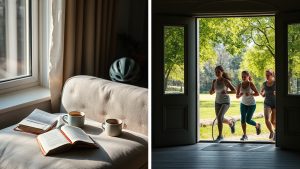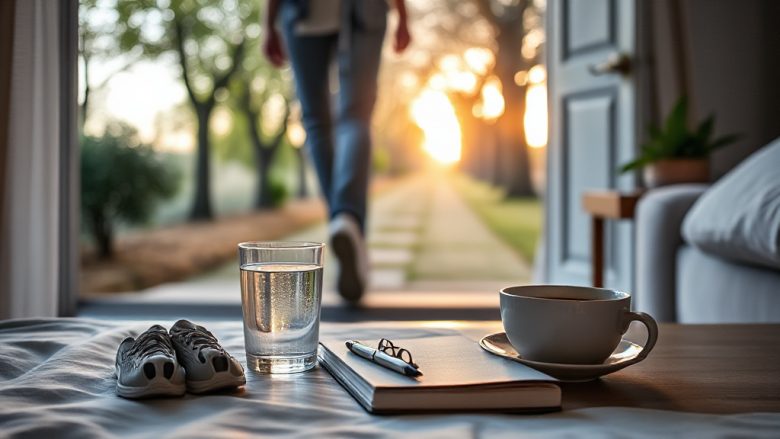
The three healthy habits to start this year that give you the most benefit for the least friction are a daily walk, a consistent sleep window, and one extra portion of vegetables at your main meal. That’s it. No app subscription, no 5am cold plunge, no overhaul of your entire life. Starting small beats a total overhaul because small habits survive bad weeks, and bad weeks are where most grand plans go to die.
Most people don’t fail at getting healthier because they lack information. They fail because they try to change everything at once, feel fine for eleven days, then hit a stressful stretch and abandon the whole thing. The habits below are chosen specifically because they’re hard to quit entirely. You can do a shortened version of each one on your worst day, and that keeps the streak alive.
Why Small Habits Beat a Total Overhaul
There’s a reason the gyms are packed in January and quiet by March. A total overhaul requires motivation every single day, and motivation is a terrible long-term employee. It shows up late, calls in sick, and quits without notice.
Small habits work differently. They run on routine rather than willpower. Once a habit is genuinely automatic, it costs you almost nothing to maintain. The trick is getting it to that point without demanding too much too soon. A ten-minute walk you actually take beats a sixty-minute workout you skip. Every time.
There’s also a compounding effect that’s easy to underestimate. One extra portion of vegetables a day is roughly 365 extra portions a year. A twenty-minute walk most days adds up to over a hundred hours of movement annually. None of that sounds dramatic in isolation, which is exactly why it works. It’s small enough to be boring, and boring is what lasts.
So the goal with these healthy habits to start this year isn’t to impress anyone. It’s to build something you’ll still be doing in October without having to think about it.
Habit One: Walk for Twenty Minutes a Day
Walking is the most underrated form of exercise there is. It requires no equipment, no membership, no recovery day, and no particular skill. It also happens to be one of the most reliable things you can do for your heart, your mood, and your energy levels.
The reason walking works as a habit is that the barrier to entry is almost zero. You can do it in normal clothes. You can do it in the rain if you own a coat. You can do it while on the phone, while listening to a podcast, or while thinking through a problem. Compare that to a workout that requires changing, travelling to a gym, and finding a free machine. One of these is going to happen on a Tuesday when you’re tired. The other probably isn’t.
How to Start Small
Don’t aim for ten thousand steps. That number was popularised by a marketing campaign decades ago and it isn’t a magic threshold. Aim for ten minutes, once a day, at a time you’ll actually remember. Right after lunch works well for a lot of people because it doubles as a break from screens and a way to avoid the afternoon slump.
Once ten minutes feels normal, stretch it to fifteen, then twenty. If you miss a day, don’t try to make it up with a double walk the next day. Just walk again. The habit is the point, not the step count.
One practical tip: attach the walk to something you already do without fail. After you finish your morning coffee. After you close your laptop for the day. After you drop the kids at school. Habits that hang off existing routines stick far better than habits that float in empty space.
Habit Two: Keep a Consistent Sleep Window
Sleep is the habit that quietly improves everything else. Better sleep makes it easier to eat well, easier to exercise, and easier to stay patient with the people around you. Poor sleep does the opposite, and it does it fast.
Notice the wording, though. A consistent sleep window, not eight hours of perfect sleep. That’s deliberate. You can’t force yourself to sleep well on demand, but you can control when you go to bed and when you get up. Those two things are habits. The quality of the sleep in between is partly a consequence of them.
Your body has an internal clock that runs on routine. When you go to bed and wake up at wildly different times, that clock has no idea what’s going on. It’s like living in permanent jet lag. Settle into a consistent window and your body starts anticipating sleep before you’re even in bed.
How to Start Small
Pick a wake-up time you can genuinely hit seven days a week, including weekends. Not the time you’d like to wake up in an ideal world, the time you can actually manage. Then work backwards to a bedtime that gives you roughly seven to nine hours.
The first week, don’t change anything else. Just get up at that time, even if you slept badly. The wake-up time anchors the whole system. Bedtime tends to follow on its own once your body realises the alarm isn’t negotiable.
If you struggle to fall asleep, the usual culprits are worth a look. Bright screens close to bedtime, caffeine after early afternoon, and a warm room are the big three. You don’t need to fix all of them at once. Pick the one that applies to you and change that.
Habit Three: Add One Portion of Vegetables to Your Main Meal
Most people don’t need a complicated diet. They need a slightly better version of what they already eat. Adding one portion of vegetables to your main meal is the simplest way to do that without counting anything or cutting out foods you enjoy.
Why adding rather than removing? Because restriction feels like punishment and punishment is hard to sustain. Adding something feels like an upgrade. It also crowds out the less useful stuff naturally. If half your plate is vegetables, there’s simply less room for the rest.
There’s a practical side too. Vegetables bring fibre, which keeps you full, and volume, which makes a meal feel like a proper meal rather than a snack you ate standing up. That fullness is often what people are actually chasing when they snack in the evening.
How to Start Small
Pick one meal a day and add one portion to it. Frozen vegetables count. Bagged salad counts. A handful of spinach wilted into a pasta sauce counts. This isn’t about becoming a person who roasts heritage carrots on a Sunday. It’s about making the easy option a slightly better one.
Keep things you’ll actually eat in the house. If the only vegetable in your fridge is a sad courgette at the back, the habit won’t happen. Buy two or three things you genuinely like, and buy them already prepared if that’s what it takes. Pre-cut vegetables cost a bit more and they get eaten. That’s a trade worth making.
After a few weeks, you’ll probably find you’re adding vegetables to more than one meal without thinking about it. That’s the habit doing its job.
If You Only Do One Thing
If you only do one thing, do the walk. It’s the habit with the fewest dependencies and the widest range of benefits. It doesn’t require you to change what’s in your kitchen or rearrange your evenings. It just requires twenty minutes and a pair of shoes. And on the days when everything else falls apart, a walk is still something you can almost always manage. Get that one habit solid first, let it become boring and automatic, and then add the next. That’s how healthy habits to start this year turn into habits you keep for good.