Most houseplants don’t die from bad luck. They die from a small handful of predictable mistakes, and almost all of those mistakes are fixable if you catch them early. If you’ve just brought a plant home and you’re already worried you’ll kill it, take a breath. The fact that you’re paying attention is half the battle. This isn’t a long list of rules to memorise. It’s a troubleshooting guide. Find the symptom your plant is showing, read the likely cause, and try the fix. That’s it.
The good news is that indoor plants tips for beginners are usually about restraint, not effort. New owners tend to do too much, too often, in the wrong direction. Once you understand what your plant is actually telling you, the guesswork disappears.
Overwatering: The Number One Beginner Killer
If there’s one mistake that accounts for more dead houseplants than everything else combined, it’s watering too much and too often. It feels counterintuitive because water is supposed to be good for plants. But roots need oxygen as much as they need moisture. When the soil stays constantly wet, the roots suffocate and start to rot, and once rot sets in, the plant can go downhill fast.
The symptoms of overwatering are easy to misread. Leaves turn yellow, often starting with the lower ones. They feel soft and limp rather than crisp. The soil stays damp for days after you water. You might notice a faint musty or sour smell coming from the pot, and if you gently lift the plant, the base of the stem may look dark and mushy. Sometimes the plant drops leaves for no obvious reason. New owners often see drooping leaves and water again, which makes everything worse.
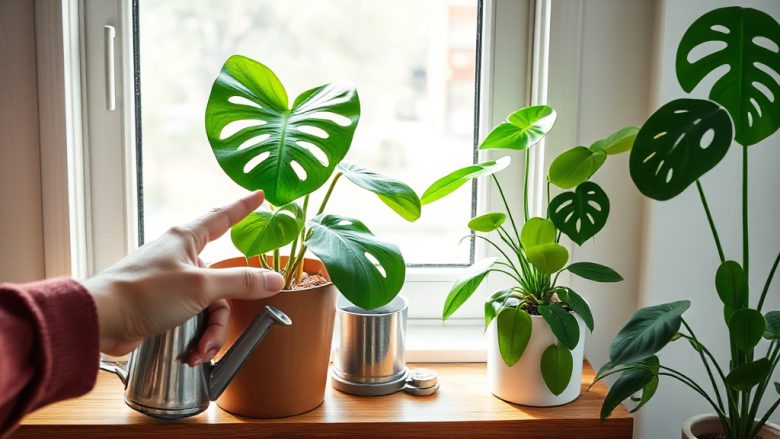
The fix starts with your finger. Push it about two inches into the soil before you water. If it feels damp at that depth, wait. If it feels dry, water. That single habit prevents most overwatering. When you do water, soak the soil until it runs out of the drainage holes, then empty whatever collects in the saucer underneath. Never let the pot sit in a puddle. If you suspect rot already, take the plant out, trim away any brown, squishy roots with clean scissors, and repot into fresh, dry-ish soil in a clean pot.
The Wrong Light: Too Much or Too Little
Light problems show up slowly, which is why beginners often miss them. A plant that isn’t getting enough light will stretch toward the nearest window, growing thin and leggy with wide gaps between leaves. New growth comes in smaller and paler than the older leaves. Variegated plants may lose their patterns and turn plain green. The whole plant can lean noticeably.
Too much light looks different. Leaves develop brown, crispy patches, usually on the side facing the window. Colours can bleach out or look washed. If the plant is right against a south-facing window in summer, the leaves might feel hot to the touch.
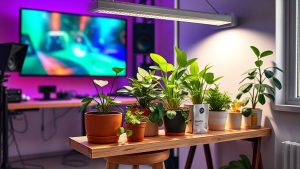
Here’s the part most beginners don’t realise: a bright room to your eyes can still be dim to a plant. Human eyes adjust; plants don’t. Most popular houseplants, including pothos, spider plants, and peace lilies, want bright but indirect light. That means a spot a few feet back from a window, or behind a sheer curtain. If your plant is stretching, move it closer to the light. If it’s scorching, pull it back or filter the window. Rotate the pot a quarter turn every week or two so it grows evenly instead of leaning.
No Drainage: The Hidden Problem in a Pretty Pot
A pot with no hole in the bottom is a slow death sentence for most plants. Water goes in, but it has nowhere to go. It pools at the bottom, the lower roots sit in it, and rot follows. This is especially common when people keep a plant in the decorative pot it came in, or repot into something stylish without checking.
You’ll spot it the same way you spot overwatering, because it causes the same thing. Yellowing leaves, mushy stems, damp soil that won’t dry out. The difference is that no amount of careful watering will fix it, because the water simply can’t escape.
The fix is simple. Move the plant into a pot with drainage holes, or use a plastic nursery pot with holes and set it inside the decorative one, lifting it out to water and letting it drain before putting it back. If you absolutely love a holeless pot, use it as a cover, not as the growing container. This one change solves a surprising number of mystery problems. While you’re at it, make sure the soil isn’t compacted. A loose, chunky mix lets air and water move, which is what roots actually want.
Pests: Small Signs You Might Be Missing
Pests are more common on indoor plants than beginners expect, partly because indoor conditions are warm and sheltered, which is exactly what they like. The trick is catching them early, because a small infestation is easy to manage and a large one is a slog.
Check the undersides of leaves and the joints where leaves meet stems, because that’s where pests hide. Fine webbing between leaves usually means spider mites. Tiny white specks that scatter when you disturb the plant are often whiteflies. Small, raised bumps that don’t move are likely scale. Little clusters of green or black insects on new growth are aphids. Sticky residue on leaves or windowsills is another clue, since many pests leave behind a sugary film.
For a light infestation, wipe the leaves with a damp cloth or rinse the plant in the shower, then repeat every few days until you stop seeing them. Isolate any affected plant from the others so it doesn’t spread. Keep the leaves clean as a habit, because dusty leaves invite pests and block light. If things get bad, a basic insecticidal soap applied to the undersides of leaves handles most common indoor pests, but you have to be consistent, not just once.
Seasonal Changes: Why Your Plant Acts Differently in Winter
One of the most overlooked indoor plants tips for beginners is that plants slow down when the seasons change, and your care should slow down with them. In winter, shorter days and weaker light mean most houseplants grow very little. They don’t need as much water, and they definitely don’t need fertiliser.
Beginners often keep watering on the same schedule all year, which is how a plant that thrived all summer suddenly declines in January. In cooler months, check the soil before every watering and expect to water much less often. Move plants closer to windows if you can, since winter light is weaker. Keep them away from cold draughts and radiators, because both stress leaves. In summer, the opposite applies: growth speeds up, soil dries faster, and a little feeding during the growing season helps. The plant isn’t being difficult. It’s just responding to its environment, and you can respond right back.
Keep It Simple: The Beginner Mindset That Works
If you remember nothing else, remember this: most struggling indoor plants are reacting to water, light, or drainage, in that order. Before you buy anything or diagnose a disease, check those three things. Feel the soil. Look at the light. Check the pot. You’ll solve the majority of problems yourself.
Resist the urge to fuss. A plant that gets consistent, moderate care does better than one that gets dramatic attention followed by neglect. Water when the soil tells you to, not when you feel like it. Give it the right light and a pot that drains. Clean the leaves now and then. Watch for pests before they spread. Ease off in winter. That’s genuinely most of it.
You will probably lose a plant at some point. Everyone does, including people who’ve kept them for years. Treat it as information rather than failure. Each plant teaches you something about your home’s light and your own habits, and the next one gets easier. Start with something forgiving like a pothos or a snake plant, learn what healthy looks like, and build from there. You’re not trying to be perfect. You’re just trying to pay attention.
Frequently Asked Questions
How often should I water my indoor plant?
Forget fixed schedules. Check the soil instead. Push a finger about two inches in, and water only when it feels dry at that depth. In summer that might mean once a week, in winter once every two or three weeks. The plant, not the calendar, sets the pace.
Why are my plant’s leaves turning yellow?
Yellow leaves usually point to overwatering or poor drainage, especially if the lower leaves go first and the soil stays damp. It can also mean too little light. Check the soil moisture and the pot’s drainage before assuming it’s a disease.
Do indoor plants need fertiliser?
Only during active growth, which is usually spring and summer. Feed lightly every few weeks in the growing season, and skip it entirely in winter when most plants are resting. Overfeeding causes more harm than underfeeding for beginners.
What’s the easiest indoor plant for a beginner?
Pothos, snake plants, and spider plants are all forgiving. They tolerate a range of light, survive the occasional missed watering, and bounce back from mistakes. Start with one of those to build confidence.