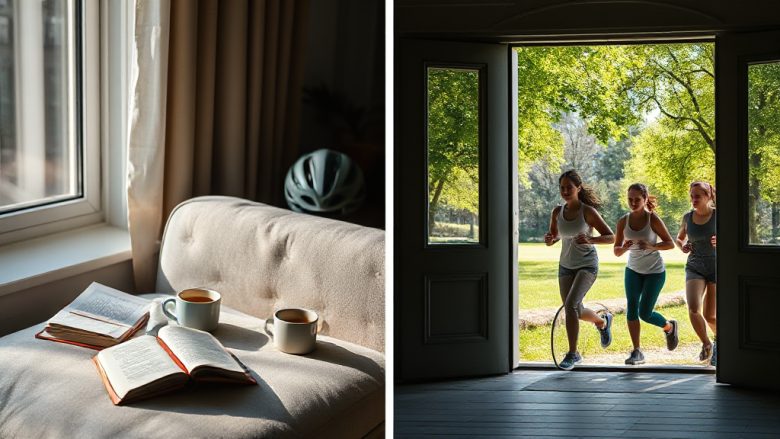
Most people don’t need more weekend. They need a different one. You know the pattern: Friday arrives with promise, Saturday fills up with errands, chores and a birthday party, and by Sunday evening you’re already dreading Monday. The weekend was full, but it wasn’t restful. That gap between busy and restored is where most recharge attempts fail, and it’s why weekend routine ideas to recharge only work when they match your actual energy, not some ideal version of yourself.
There are two broad styles that genuinely work, and they pull in opposite directions. The slow weekend is quiet, low-stimulation and restorative. The active weekend is social, physical and energising. Neither is better. The trick is knowing which one your body is asking for, then building a loose structure around it instead of hoping rest will happen by accident.
Why Your Weekend Feels Busy But Not Restful
Rest isn’t the absence of activity. It’s the presence of the right kind of activity for your current state. If you’ve spent the week in back-to-back meetings, staring at screens and making decisions, a Saturday packed with social plans can feel like more work. If you’ve spent the week isolated and sedentary, a quiet weekend alone can deepen the slump rather than lift it.
The other problem is decision fatigue. When you leave the weekend unstructured, small choices eat the day. What to eat, where to go, when to start. By the time you’ve decided, half the morning is gone and you feel vaguely guilty about it. A light routine removes those micro-decisions so the recharge actually happens. You don’t need a minute-by-minute schedule. You need a shape.
A Side-by-Side Look at Slow vs Active Weekends
Below is how each style plays out across a typical weekend day. Read both and notice which one makes your shoulders drop.
Morning: Waking Up and Starting the Day
Slow weekend. You wake without an alarm, or with one set later than usual. The first hour has no screens. Coffee or tea gets made properly, maybe with the radio on low. Breakfast is unhurried, often the same thing each week so there’s nothing to decide. A short walk around the block, no destination, just to move your legs and get daylight on your face. The point is to let your nervous system come online gradually rather than being yanked into alertness.
Active weekend. You wake at a similar time to weekdays, but for something you chose. A park run, a swim, a long cycle, a climb, a class you booked on Thursday. Movement comes first because it sets the tone for the whole day. Breakfast is functional and quick, then you’re out the door. The energy you get from exercising before the day has properly started carries you through the afternoon far better than a lie-in would.
Afternoon: The Middle Hours That Make or Break It
Slow weekend. This is where the real restoration happens, and it’s usually quiet. Reading on the sofa. A long bath. Cooking something that takes an hour and a half because the process itself is the point. A nap if you need one, kept short so it doesn’t wreck the evening. One small productive task at most, like watering plants or sorting a drawer, so you feel gently useful without tipping into chore mode.
Active weekend. Afternoon is for people and projects. Meeting a friend for lunch, wandering a market, a museum, a long walk with company, a side project that needs focus and hands. The key is that the activity has a social or creative edge, not just physical effort. Doing something alongside other people, even quietly, tends to lift mood more than doing it alone.
Evening: Winding Down Without Wrecking Sleep
Slow weekend. Dinner is early and simple. Screens go off an hour before bed. You might write a few lines about the week, or just sit with music. The goal is a soft landing so Sunday night doesn’t feel like a cliff edge. Bedtime stays roughly consistent with weekdays, which matters more than most people realise for Monday morning.
Active weekend. Evening can be genuinely social: dinner with friends, a film, a gig, a games night. The risk is overdoing it and arriving at Sunday exhausted. The fix is a hard stop. Decide in advance when the evening ends, and protect the last hour as quiet time. An active weekend still needs a wind-down, it just comes later.
How to Choose the Right Style for This Weekend
Ask yourself one question on Friday afternoon: what does my body want right now? If the week has been loud, crowded and demanding, you probably need slow. If it’s been quiet, repetitive and screen-heavy, you probably need active. Most people default to the same style every week and wonder why it stops working.
A few practical signals help. If you’re craving silence and solitude, that’s a slow weekend. If you’re craving movement and company, that’s an active one. If you’re genuinely unsure, try a hybrid: a slow Saturday and an active Sunday. That combination often works well because Saturday restores and Sunday energises, so you enter the week feeling both rested and engaged.
One more thing worth saying: you don’t need to fill the weekend to justify it. A weekend that looks empty from the outside can be the most restorative kind. The measure isn’t how much you did. It’s how you feel at 9pm on Sunday.
Protecting Your Rest Once You’ve Chosen
The hardest part isn’t picking a style. It’s defending it. Weekends get colonised by other people’s plans, by errands that could wait, and by the quiet guilt that says you should be doing more. A few habits help.
Decide your non-negotiables before the weekend starts. For a slow weekend, that might be no alarms and one screen-free morning. For an active one, it might be one social plan and one workout, and nothing else scheduled. Keep the list short. Two or three anchors are enough to give the day shape without turning it into a second job.
Also, protect Sunday evening deliberately. It’s the most fragile part of the weekend and the one most likely to be sacrificed. Keep it low-key, keep it yours, and start winding down earlier than feels necessary. Monday morning is built on Sunday night.
Finally, treat rest as something you do, not something that happens when everything else is finished. It never will be. The laundry will still be there. The emails will still be there. The recharge is the point of the weekend, not the reward for finishing it.
Frequently Asked Questions
How do I know if I need a slow weekend or an active one?
Look at your week. If it was loud, social and demanding, you likely need slow. If it was quiet, isolated and sedentary, you likely need active. The craving itself is usually the answer. If you’re torn, split the weekend: slow Saturday, active Sunday.
Can I mix slow and active weekend routines?
Yes, and it often works better than committing to one. A slow morning followed by an active afternoon gives you both restoration and energy. The only rule is not to stack too much. One anchor activity per half-day is plenty.
What if I have kids or caring responsibilities?
The framework still works, it just looks different. A slow weekend might mean a quieter morning at home rather than a lie-in. An active weekend might mean a family walk instead of a solo run. The principle is the same: match the pace to the energy, and protect one small block that is genuinely yours.
How long does it take to feel recharged?
Often just one well-chosen weekend. The first time you get the style right, you’ll notice it on Sunday evening. If you’ve been running on empty for weeks, it may take two or three weekends of consistent rest to feel the full effect.